

This refers to situations beyond clean up. Is the character supposed to pick up a cup of coffee but reaches five inches too far to the left? This stage corrects errors like that and ensures all characters hit their marks. This type of animation can work in tandem with set design as you might want to bring props or interactive elements closer to the action instead of the other way around.Each situations calls for its own solution.

This refers to importing processed motion capture to the scene, and retargeting it to the characters that need it. It sounds simple enough, but frankly it seems needlessly complicated, though presently necessary. Imagine that your capture actor was 6ft tall and you attempted to apply that motion data onto a gnome character. The tall skeleton data would stretch the Gnome to be basketball-player-ready. The act of retargeting tells one skeleton how to translate to another.

Applying Characters, along with their motion capture, within a scene sequence they belong to and syncing the movements of each character to each other. Getting that dance or fight to land right is what’s happening here. The interaction with each other, or in the case of solo scenes, simply the best take for the intention.
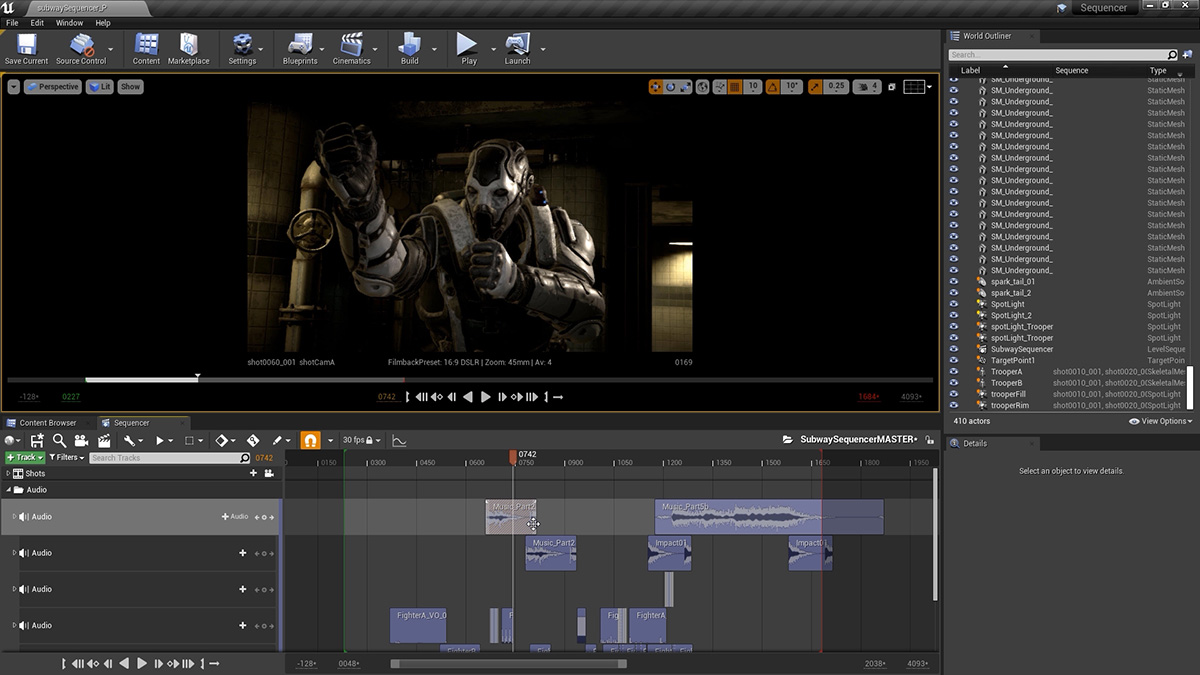
Here you apply the soundtrack used during motion capture to your sequence so that dialog and sound effects are sync’d to one another. As it did during the capture session, this soundtrack helps drive the scene. Here too, as other elements are visualized in-engine, more sound effects can be added – each one serving to inform the filmmaker where the camera should be pointing and when.